
The Hidden Costs of Poor Violin Teaching
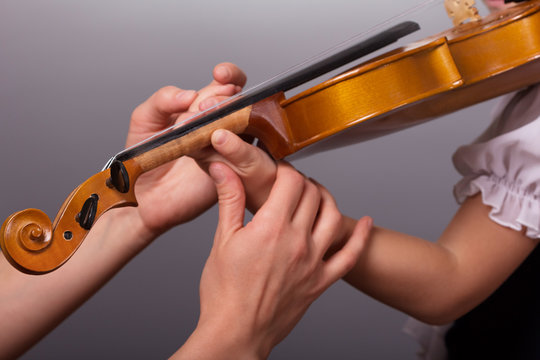
Many parents and adult beginners assume that any violin lesson will eventually lead to progress. As long as the student practices and attends lessons regularly, improvement should follow. In reality, the quality of early teaching has a much deeper impact than most people realise.
Violin is an instrument where foundational habits are formed very early. Posture alignment, bow hold structure, intonation awareness, and listening sensitivity develop during the first stages of learning. When these fundamentals are guided carefully, progress tends to be stable and sustainable. When they are overlooked or rushed, problems may not appear immediately but often surface later as technical limitations.
The consequences are rarely obvious in the beginning. A student may still learn pieces, pass early exams, or appear to progress normally. However, underlying technical gaps often become more visible as musical demands increase. Understanding these hidden costs helps parents and students make more informed decisions when choosing a teacher.
Menu
In this article, we will take a closer look at the hidden long-term consequences of poor violin teaching, how technical problems develop over time, and why strong foundations are essential for sustainable musical progress.
1. Technical Rebuilding Time

One of the most common consequences of weak early instruction is the need to rebuild technique later.
In violin playing, many movements become deeply ingrained through repetition. Bow grip structure, wrist flexibility, finger placement habits, and posture alignment quickly turn into muscle memory. If these habits develop incorrectly, correcting them later becomes significantly more difficult than learning them properly from the beginning.
Students who switch teachers sometimes discover that what appeared to be progress was actually masking inefficient technique. A bow hold that looks acceptable in simple repertoire may collapse when faster passages require flexibility. Left-hand tension that was manageable in early grades may interfere with shifting or vibrato development.
Rebuilding these habits often requires temporarily stepping back from repertoire to focus on basic exercises again. While this process is necessary, it can take months of careful retraining before new habits replace the old ones.
2. Posture Correction at a Later Stage

Posture is one of the most critical elements of violin playing, yet it is often underestimated during early lessons.
Proper posture supports balance between the instrument, the bow arm, and the left hand. When posture is unstable, other technical problems begin to appear. A raised shoulder can restrict bow movement. A collapsed wrist may affect finger placement. Poor violin positioning can limit tone projection and bow control.
These issues are easier to correct when the student is still developing their physical coordination. At later stages, however, posture becomes tied to long-standing muscle patterns. Adjusting it may feel uncomfortable because the student has already adapted to compensating movements.
Many intermediate students struggle with tone quality not because of musical understanding, but because posture limitations restrict how the bow interacts with the string.
3. Intonation Instability

Unlike fretted instruments, the violin relies entirely on precise finger placement guided by listening awareness. This makes intonation one of the most sensitive aspects of violin technique.
Students who are not trained to listen actively from the beginning often develop inconsistent pitch accuracy. In early stages, the problem may not be obvious because pieces are simple and slower. However, as repertoire becomes more demanding, small inaccuracies begin to accumulate.
Intonation instability can appear in scales, shifting passages, or double stops. Without strong listening habits and clear left-hand spacing, the student may struggle to maintain consistent pitch across different keys and positions.
Developing reliable intonation requires careful guidance in ear training, hand frame development, and slow, attentive practice. When these elements are overlooked early on, correcting them later can take considerable time.
4. Exam Delays and Plateaus

In structured systems such as those used by examination boards like ABRSM and Trinity College London, technical expectations increase steadily from grade to grade.
Students with weak foundations may progress normally through the earliest grades, where repertoire remains relatively accessible. However, the transition to intermediate levels often exposes underlying technical weaknesses.
For example, shifting accuracy becomes more important around Grades 3 to 5. Bow distribution and tone control also require greater refinement. Students who previously relied on memorisation or repetitive practice may begin to experience slower progress.
This often results in repeated exam attempts, extended preparation time, or noticeable plateaus where advancement becomes increasingly difficult.
5. Loss of Confidence and Motivation

Technical difficulties do not only affect performance. They also influence a student’s confidence.
When progress slows unexpectedly, students may feel frustrated or uncertain about their ability. Children in particular can become discouraged if they feel that their effort does not lead to improvement.
Sometimes the issue is not a lack of effort or interest, but unresolved technical problems that make playing unnecessarily difficult. Without clear explanations and supportive guidance, students may interpret these struggles as personal failure rather than a solvable technical challenge.
Over time, this can lead to reduced motivation or even complete withdrawal from music learning.
6. Financial Waste Over the Years

Violin education is a long-term investment. Lessons, instruments, and examination fees accumulate gradually over many years.
When foundational teaching is weak, families may spend significant resources without achieving stable progress. Students may need additional corrective lessons, extended preparation periods, or even a complete technical rebuild under a new teacher.
While these steps can help restore progress, they often represent time and financial resources that could have been used more effectively with strong guidance from the start.
Choosing a teacher based solely on convenience or availability may appear practical initially, but the long-term costs of correcting foundational issues can be much higher.
7. Why Foundation-First Teaching Prevents These Issues

Strong violin education focuses on building stable foundations before accelerating progression. This includes careful attention to posture alignment, bow mechanics, listening awareness, and balanced technical development.
When these fundamentals are guided properly, students tend to progress with greater confidence and fewer long-term obstacles. Exams become checkpoints of development rather than sources of pressure, and repertoire expands naturally as technical control improves.
At The Happy Violinist, this foundation-first approach is central to how lessons are structured. Rather than rushing students through grades or focusing only on exam pieces, teachers pay close attention to the technical details that shape long-term playing ability. Posture alignment, bow hold stability, intonation awareness, and listening sensitivity are carefully corrected from the earliest stages, preventing the accumulation of habits that later become difficult to change.
Many students who transfer from other learning environments often discover that their difficulties with tone control, intonation, or technical fluency are not due to lack of effort, but unresolved foundational habits. By addressing these issues systematically, students are able to rebuild confidence and move forward with a clearer and more reliable technical framework.
For families and adult learners seeking a structured and sustainable path in violin learning, the goal is not simply faster progress, but stronger progress. When the foundation is secure, every stage of learning becomes more efficient, more rewarding, and far less frustrating in the long run.